how long can coffee sit out
This quick guide answers in plain terms when a cup becomes unsafe and when it simply loses flavor. You will learn the difference between fresh and safe benchmarks so you can choose which matters most for your mug.
Flavor often starts to fade about 30 minutes after brewing. Black coffee may remain a safe drink longer than it tastes fresh, while milk or creamer cuts safe time dramatically — commonly about 2 hours at normal room temperature.
This article previews common scenarios: hot black, milk‑added cups, iced drinks, cold brew, and espresso. It also covers simple storage tips — airtight jars, refrigeration, or a thermal carafe — and gives easy rules of thumb and the why behind them. Finish with a short routine to avoid wasted cups and overnight mistakes.
Quick safety and flavor check for coffee left at room temperature
A few simple checks let you tell if a neglected mug is okay to drink or past its best.
When safety and taste stop matching
Flavor loss starts fast. Aromatic compounds begin fading around 30 minutes after brewing, so taste often dulls before a real safety risk appears.
Black coffee may still be safe even when it tastes flat. But add milk or creamer and the safety clock shortens dramatically.
The temperature danger zone
The USDA danger zone (40°F–140°F) matters because mid-range temps speed microbial growth. Brewed coffee leaves the near-sterile state of boiling water once it cools and sits exposed to air and microbes.
- Check what’s in the cup: black, dairy, or non-dairy.
- Estimate time left at room temperature and note room conditions.
- Sniff and sample a small sip — a sour or curdled note is a clear reject.
| Drink type | Best taste window | Safety shelf window at room | Notes |
|---|---|---|---|
| Black | ~30 minutes | Up to several hours | Tastes stale first; safe longer if undiluted |
| With dairy | ~30–60 minutes | About 2 hours | Dairy raises spoil risk inside danger zone |
| Iced or cold brew | Slower taste decline | Varies; refrigerate for longer life | Concentrates last longer than ready-to-drink |
Decision tree: black vs dairy vs non-dairy and less than 2 hours vs more than 2 hours gives a fast call. Next, we’ll explain the process behind these changes — air, temperature, and bacteria — then give drink-by-drink timing guidance.
What makes coffee go bad sitting out: air, temperature, and bacteria
A fresh mug changes fast because air strips volatile aromatics, heat speeds chemical shifts, and environmental microbes may land in the drink. This short explanation shows why taste and safety diverge over time.
Oxidation and the loss of volatile flavor compounds
Once exposed to air, aromatic compounds escape and oils begin to break down. That loss makes the layered flavor feel flat. Dissolved solids also shift, then bitterness rises as oils degrade.
How environmental bacteria (and dirty mugs) speed up spoilage
Brewed liquid starts hot, so initial bacteria levels are low. But a cooled cup open in a shared place picks up microbes. A not‑fully‑clean mug or residue seeds growth faster than a pristine one.
Why coffee can taste stale fast even before it’s unsafe
Natural compounds like caffeine and chlorogenic acid give mild antimicrobial help, yet they don’t stop contamination as the drink cools. Stale flavor often arrives well before a real safety risk.
- Air removes aroma; oils turn harsh.
- Warm temperatures speed off‑flavor development.
- Dirty cups and exposed surfaces raise bacteria risk, and dairy later widens that window for coffee bad outcomes.
How long can coffee sit out at room temperature?

Room-temperature timelines differ by drink type; taste and safety don’t run on the same clock. Below is a compact guide that separates the best taste window from maximum shelf life at typical indoor temperature.
Hot black brew: taste vs. safety
Best taste often lasts 30–120 minutes. Aromatics fade after the first hour and bitterness rises. Maximum shelf life for an untouched black cup at room temperature can approach 24 hours, but flavor becomes flat long before then.
Hot with milk or dairy creamer
Dairy brings a safety shift. Use the two-hour rule at normal room conditions. Above about 90°F, cut that to one hour. Spoilage moves the cup from stale to a potential unsafe drink.
Non-dairy creamer and shelf-stable options
Shelf-stable powdered or UHT creamers allow a longer countertop window than liquid milk creamer. Check packaging; if the creamer needs refrigeration, follow dairy limits.
| Drink | Best taste window | Max safety at room temp |
|---|---|---|
| Hot black brewed coffee | 30–120 minutes | Up to ~24 hours (flavor degrades) |
| Hot + dairy | 30–60 minutes | About 2 hours (1 hour if very warm) |
| Cold brew / iced | Slower taste loss, watery after ice melts | Cold brew: ~12 hours; iced black similar to black |
| Espresso | Crema fades in minutes; taste flattens | Short term — best consumed quickly |
Iced drinks and cold brew
Iced brewed drinks lose body as melting water dilutes flavor within an hour or two. Cold brew often resists aroma loss and can keep acceptable taste around 12 hours at room temperature, but it is not indefinite shelf life.
If a cup was sipped from, left uncovered, or sits in a busy area, choose a more conservative cutoff and refrigerate when in doubt.
How to handle coffee with milk, half-and-half, or creamer safely
Milk, half‑and‑half, or creamer change the rules for a mug. Once dairy enters the cup, you are managing food safety as much as flavor. Follow simple time limits and senses to keep drinks a safe drink.
Room temp vs. hot weather: when the limit drops to one hour
Use the two‑hour rule at normal room temperature (under 90°F). If the ambient temperature or direct sun makes the cup very warm, shorten that to one hour. Think sunny cars, a patio in midday, or a desk by a hot window.
Signs dairy is turning: sour smell, curdling, and texture changes
Trust your senses. Discard a drink that has:
- a sour odor or tangy scent
- a slimy film or odd texture
These are discard signals, not fixes. Spoiled dairy can cause stomach upset; don’t stir or heat to “make it fine.” For more details, see this dairy safety guide.
Travel and desk tips to keep lattes and cappuccinos safer
Use a lidded thermal cup and avoid topping off the same cup for hours. Don’t reuse an unwashed mug for a fresh milk drink. If you won’t finish within the safe hours, place the drink in a sealed container and move it to the fridge right away.
| Scenario | Limit | Action |
|---|---|---|
| Indoors under 90°F | 2 hours | Keep covered; refrigerate if unfinished |
| Warm car or sunny patio | 1 hour | Use thermal cup or discard after limit |
| Travel mug with lid | Up to limit if closed | Wash between fills; refrigerate leftovers |
Cold brew vs. iced coffee: different processes, different shelf life
Not all chilled drinks are made the same: extraction method shapes flavor life and safe storage. This short section contrasts cold extraction with iced drinks and gives simple storage rules to keep a batch tasting clean.
Cold extraction versus iced from hot brew
Cold brew is steeped in cool water for hours. Iced coffee is hot brewed then chilled or poured over ice. That difference changes body, dilution, and how flavor fades.
Concentrate versus ready-to-drink
Cold brew concentrate is stronger and gets diluted later. That concentrate often holds taste and shelf life better when kept sealed in a container.
| Type | Typical shelf life | Storage note |
|---|---|---|
| Cold brew concentrate | Up to 1–2 weeks refrigerated | Keep in an airtight container |
| Ready-to-drink cold brew | 3–5 days refrigerated | Seal well; pour fresh servings |
| Iced brewed coffee | 1–2 days refrigerated | Melts and dilutes faster; consume sooner |
Airtight storage and refrigeration
Oxygen dulls aroma and speeds staling. Use an airtight container and move batches to the fridge promptly to extend shelf life and keep flavor brighter.
- Make a batch, refrigerate most, pour small servings.
- Never leave a poured and sipped glass at room temp all day.
- A sealed container in the fridge protects both taste and life of the drink.
How to store leftover coffee to keep flavor longer
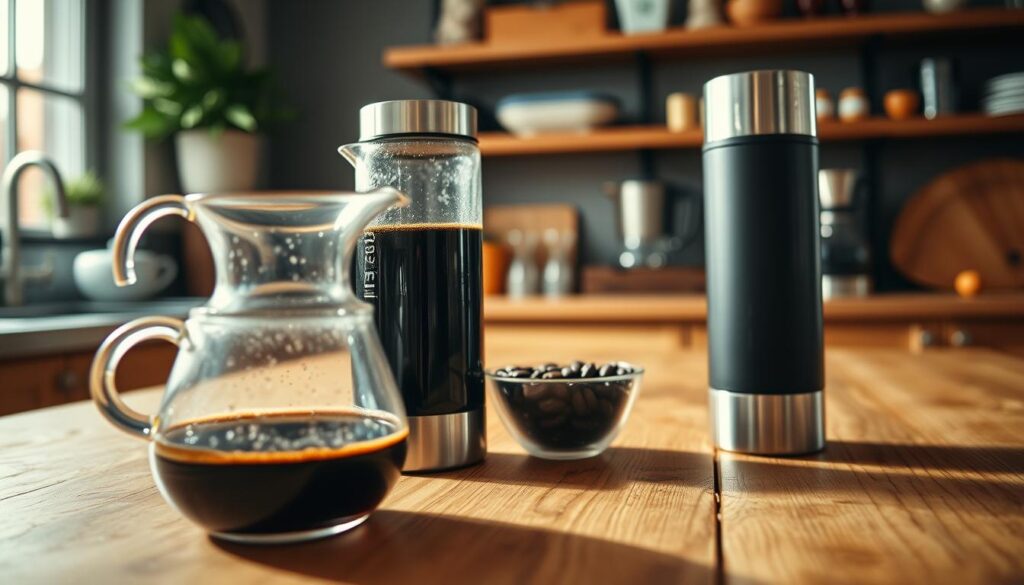
A quick transfer and the right container will save flavor and prevent waste.
Move it off the hot plate
Leaving hot coffee on a hot plate strips aroma and makes the brew taste harsher. Prolonged heat drives off volatile oils and raises bitterness.
Use a sealed, airtight container
Limit air exposure. Transfer the pot into an airtight container as soon as you stop pouring. A tight lid slows oxidation better than an open carafe.
Refrigerate promptly for safer leftover
Cool and place the sealed container in the fridge if you plan to drink later. Chilling slows staling and lowers contamination risk, especially for iced brew.
Thermal mugs and carafes
For slow sippers, use a thermal mug or insulated carafe to keep beverage temperature steady. That keeps drinks out of the 40°F–140°F danger zone and preserves flavor.
Batch-brewing smarter
Brew smaller amounts more often, or use a French press for controlled batches. Adjust your coffee maker settings or make a short batch to avoid excess leftover.
| Method | Best use | Storage note |
|---|---|---|
| Airtight glass jar | Short-term storage | Seal immediately; limits air and keeps flavor |
| Insulated carafe | Serving at meetings | Keeps temperature steady; better than hot plate |
| Refrigerated sealed container | Keep for iced brew or recipes | Chill promptly; consume within a few days |
Can you reheat leftover coffee without ruining the taste?
Warming leftover brew brings back heat, not the bright scents of a fresh cup. Reheating’s realistic goal is an acceptable drink, not a mirror of the original pour. If dairy was added or the mug sat many hours, reheating does not fix spoilage and may not make it a safe drink.
Best reheating method for fewer bitter notes
Reheat gently. Use a microwave at short intervals or warm on the stove over low heat until it reaches the temperature you plan to drink. Avoid boiling; high heat drives off remaining aromatics and increases bitterness.
When reheating doesn’t fix a “coffee gone bad” problem
Reheating will not reverse bacterial growth or dairy spoilage. Do not attempt to salvage any mug with a sour smell, visible film, or curdled texture. Those signs mean the drink is coffee bad and should be discarded.
| Method | How to reheat | Pros | Cons |
|---|---|---|---|
| Microwave | 30–45 sec intervals, stir, target temp | Fast, controlled heat | Risk of hotspots; overcooks flavor |
| Stovetop | Low heat, small saucepan, stir | Even warming, less scalding | Takes longer; needs attention |
| Repurpose | Turn into latte or iced drink | Masks harsh notes; enjoyable | Doesn’t restore original brew profile |
Simple fixes help: add milk or make an espresso-style milk drink, pour over ice, or blend into recipes. Best prevention remains prompt storage in a sealed container or refrigeration to preserve flavor and reduce waste.
When to toss coffee: safety red flags and taste dealbreakers
Use firm cutoffs to avoid risky sips. Follow time-based rules and trust your senses when deciding whether a cup is worth keeping.
Time-based cutoffs
Black brew: if untouched and free of additives, it may remain a safe drink up to about 24 hours at room temperature, though taste fades much sooner.
With milk or creamer: follow a two‑hour rule at normal room temps. If the room is very warm, reduce that to one hour. Dairy shortens shelf life because bacteria grow faster once the drink cools.
Visible mold, film, or off odors
- Visible mold or fuzzy spots: discard immediately.
- Odd surface film or slimy texture: toss—these are bacterial signs.
- Sour or rotten smell: do not risk it.
Why “overnight on the counter” is a no‑go
An overnight cup combines long exposure with room bacteria and oxidation. Back‑washing from sipping makes contamination worse. When in doubt, throw it out—especially for people with sensitive immune systems.
| Type | Best action | Reason |
|---|---|---|
| Black, unopened | OK up to ~24 hours | Flavor drops but bacteria risk lower |
| With dairy | Discard after 1–2 hours | Dairy fuels bacterial growth |
| Left overnight | Discard | High chance of spoilage or off taste |
Keep your next cup fresher: a practical routine for brewing, sipping, and storing
A compact daily ritual around grinding, brewing, and storage preserves taste and reduces waste.
Brew only what you will drink within the best-taste window. Use fresh beans, grind just before brew, and follow the right water ratio for your method.
For solo drinkers, make small batches. Pour a modest cup for now and keep the rest sealed in an airtight container. Move leftovers to the fridge within two hours if dairy is present.
For iced drinks, chill before adding ice to cut dilution. Use a thermal mug for commutes to manage temperature and sustain caffeine without losing flavor.
Do this routine and you’ll enjoy better cups, fewer stale mugs, and a simpler caffeine plan that fits real life.