how to use a coffee maker
Automatic drip brewing gives steady results and is friendly for beginners. Small upgrades—filtered water, a reliable ratio, and regular cleaning—lift flavor close to manual methods cited by Trade Coffee.
This guide covers setup through serving for a dependable daily cup at home. Most machines are simple but not basic; grind, water quality, and warming change taste even when the device does the work.
Read on for clear sections: parts of the machine, step-by-step brewing, dialing ratios and time, quick taste fixes, pod versus drip notes, and habits that keep freshness.
The piece aims at first-time users, those who inherited an appliance, and anyone seeking better results without new gear. Practical standards use tablespoons-per-ounces and grams-per-liter so you can repeat a brew with any beans.
Know your coffee maker before you brew
Before brewing, learn the key parts that make each cup repeatable. A brief walk-through of the reservoir, basket, and carafe helps avoid weak or bitter results.
Water reservoir and fill lines
Find the water reservoir and read the fill lines on the side. Many machines mark “cups” smaller than 8 oz, so follow your maker’s scale for the correct pot size.
Filter basket and filter options
The filter basket sits above the carafe and holds paper or reusable filters. Hot water showers the grounds and gravity pulls brewed liquid down through the basket.
Paper filters trap oils and give a cleaner cup. Mesh or metal filters add body but bring some sediment. Cloth filters sit between those two in clarity and texture.
Carafe, warming plate, and extra settings
Carafes come as glass or thermal metal. The lid often presses a valve so drips stop when removed; misalignment can overflow or stop flow entirely.
The warming plate keeps a glass pot hot but extended heat speeds evaporation and breaks down compounds, pushing flavor toward bitterness. Some models offer bold, temperature, or programmable settings, but not every machine lets you control brew time or true brew temperature.
- Pre-brew checklist: reservoir level confirmed
- Filter seated and basket locked
- Carafe clean, empty, and properly placed
- Plate surface clear and dry
| Part | Common Types | Effect on Flavor | Maintenance |
|---|---|---|---|
| Water reservoir | Plastic or removable tank | Clean water keeps taste neutral | Rinse weekly; descale monthly |
| Filter basket | Paper, metal mesh, cloth | Paper = clean; mesh = fuller; cloth = balanced | Paper discard; wash mesh; rinse cloth |
| Carafe | Glass pot, thermal metal | Glass shows color; thermal keeps heat longer | Wash after use; avoid cracked lids |
| Warming plate | Electric plate under glass carafe | Prolonged plate heat increases bitterness | Keep dry; turn off when idle |
how to use a coffee maker for classic drip coffee
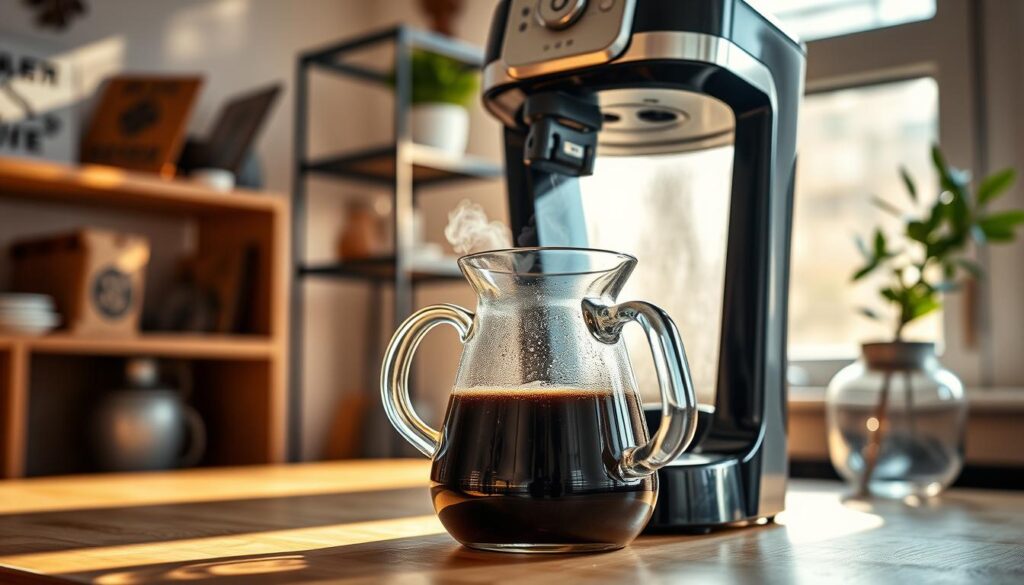
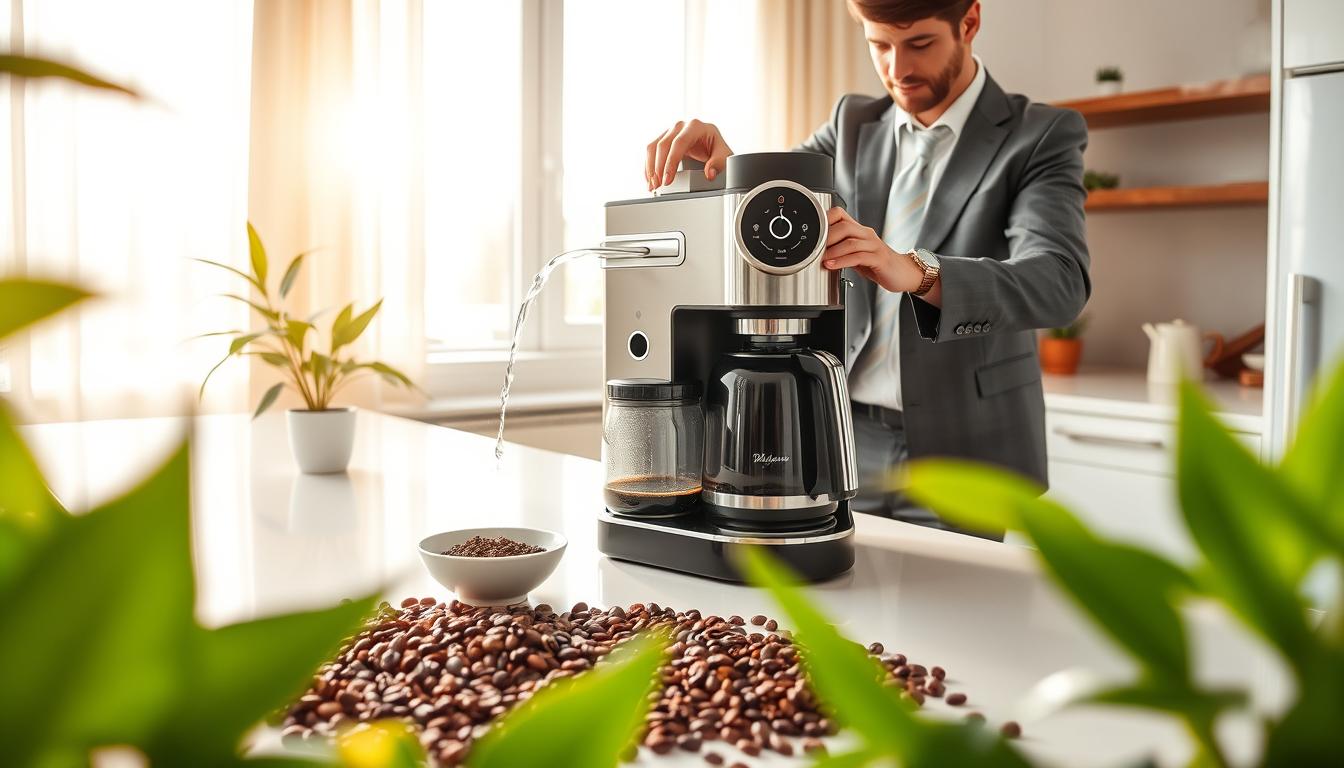
Get a clean carafe and cold, filtered water ready. Proper setup prevents flat or bitter results and keeps each batch consistent.
Set up the machine and start with a clean carafe
Place the machine on a stable counter and plug it in. Make sure the carafe is washed; old oils change flavor.
Fill the water reservoir with cold, filtered water
Use filtered or bottled water for best extraction. Distilled water can taste flat because it lacks minerals that help pull flavor.
Prep the filter for your basket style
Fold cone filter seams, leave wavy flat-bottom filters as-is, and use no prep for metal reusable filters. Seat the filter so it sits flush.
Add grounds and follow a reliable ratio
Use medium ground coffee for classic drip. Level the grounds gently so water passes evenly.
Example 10-cup recipe: 1331 ml water : 78 g medium ground coffee. Weigh when possible (1 ml ≈ 1 g).
Start the cycle and let the brewing process finish
Close the lid, select default settings, and press brew. Wait for the full cycle and active dripping (about 3–5 minutes) before pouring.
Serve promptly and manage warming plate time
Pour a cup coffee soon after the drip ends for best clarity. Remove a glass carafe from the warming plate or transfer the batch to a thermos to avoid bitterness.
| Action | Result | Quick Tip |
|---|---|---|
| Clean carafe | Neutral flavor, no old oils | Wash after each use |
| Cold, filtered water | Better extraction and clarity | Avoid distilled water |
| Proper filter prep | Even flow, no bypass | Fold cone seams; seat flat filters |
| Let cycle finish | Full extraction, balanced cup | Don’t pull carafe mid-brew |
Dial in water, coffee, and time for better quality
Dialing ratios and timing gives repeatable results that improve cup quality fast.
Consistency matters because it isolates variables. When water amount, grounds, and brew time stay the same, small changes in taste are easier to track and fix.
Easy measurements for a consistent cup
Use tablespoons and ounces if you lack a scale. For precision, weigh ingredients: 1 ml water ≈ 1 g. The SCA guideline of ~55 g per liter is a solid baseline.
Common ratio standards
- Standard: 55 g per 1 L water (balanced)
- Stronger: 60–65 g per L (bolder cup)
- Lighter: 45–50 g per L (milder cup)
Brew time and temperature notes
Most drip machines finish active dripping in about 3–5 minutes. Faster or slower runs can signal grind or clog issues.
If brew temperature runs cool, pre-run filtered water through the cycle into the carafe and pour it back before brewing. Aim near 195°F when possible for better extraction.
| Variable | Typical Range | Effect on taste | Quick tip |
|---|---|---|---|
| Water amount | Measured ml or g (1:1) | Controls strength and extraction | Pick one cup reference and stick with it |
| Coffee dose | 45–65 g per L | From mild to bold | Weigh grams for repeatability |
| Brew time | 3–5 minutes | Too fast = weak; too slow = bitter | Check grind and basket for clogs |
| Water quality | Filtered, mineral-balanced | Supports full extraction; avoids flatness | Avoid distilled; filter out chlorine |
Good measurement and decent water give sweeter, cleaner cups and cut down wasted pots. Small, steady steps make the daily process more reliable.
Troubleshoot taste by adjusting grind and settings
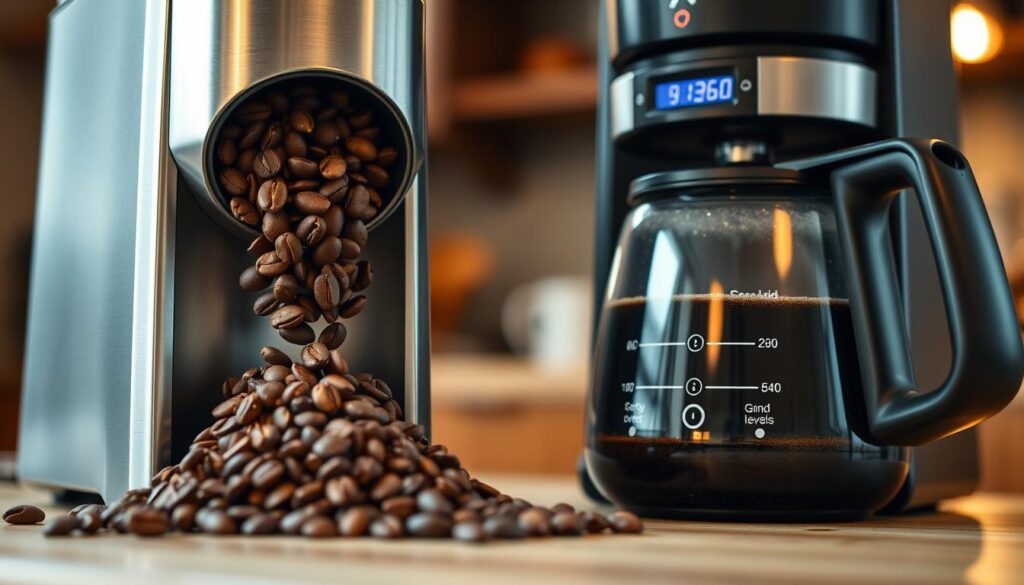
Taste issues in drip coffee usually point to grind or machine settings worth checking. Start by tasting the cup with attention: bitter notes often mean over-extraction. Sour or thin flavors usually indicate under-extraction.
When to go finer or coarser
If the cup is bitter or drying, make the grind coarser next brew. If it tastes sharp, sour, or lacks sweetness, move one small step finer. Small changes work better than large jumps.
Strength selectors and practical notes
Many machines offer a “Bold” strength setting that slows flow or pulses water differently. Pair a bolder setting with a slightly coarser grind if bitterness rises. Prefer dose changes over maxing strength modes for safer results.
| Issue | Likely cause | Action | Tip |
|---|---|---|---|
| Bitter | Over-extraction / too fine | Grind coarser | Adjust one notch; test next brew |
| Sour or thin | Under-extraction / too coarse | Grind finer | Small step changes; record results |
| Weak | Low dose or flow | Add grams before changing setting | Increase dose, then test strength setting |
For grinder types: use repeatable burr settings. If using a blade unit, pulse for even, sand-like ground particles. For a full method on adjusting dose and grind by taste, see adjust dose and grind by taste.
Pod coffee makers vs. drip machines
Choosing between pod systems and carafe-style brewers comes down to speed and control. Pod units aim for a fast, repeatable single cup. Drip machines brew multiple servings into a carafe and let you tweak variables for better flavor.
Reservoirs, pod housing, and filters
Pod devices use a reservoir that feeds hot water through a sealed pod housing. Closing the lid pierces the capsule and routes water through an internal filter. This removes the need for measured grounds.
Drip machines have larger reservoirs sized for full pots and a filter basket that controls flow across loose grounds. That design relies on grind, dose, and water amount for the final cup.
Practical differences and picking the right size
- Pod systems: minimal cleanup, preset cup sizes, great for single-serve speed.
- Drip brewers: lower cost per cup, adjustable strength, better when serving several people.
- Match the selected size button on a pod machine to the pod type so drinks don’t taste weak.
| Feature | Pod system | Drip machine |
|---|---|---|
| Core goal | Single-serving speed and repeatability | Multi-cup brewing and flexibility |
| Reservoir | Smaller, refillable for several cups | Larger, sized for full carafe fills |
| Filter / dosing | Pre-portioned pods, built-in filter | Paper or reusable filter with measured grounds |
| Best when | Convenience and minimal cleanup matter | Flavor control and serving multiple people |
Make every brew better with simple habits
Simple rituals keep your machine brewing like new. Start each session with fresh, cold water and empty any stale reservoir water before filling.
Rinse the carafe and wipe the basket and filter area after every pot. Old oils in a glass carafe or trapped in the basket dull flavor fast.
Do a quick rinse after each use and follow the maker’s manual for periodic descaling and deeper cleaning. This keeps heat and flow consistent and preserves cup quality.
Minimize warming plate time. If coffee must sit, pour the batch into an insulated carafe or thermos rather than leaving a glass pot on the plate.
Pick one ratio and stick with it for a week, then tweak. Make sure: filter seated, basket closed, carafe aligned, fresh water added, and the cycle completes before serving.
.