how to make coffee for a large group
Scaling a brew for many guests takes more than just multiplying ingredients. Bigger batches change contact time and flow, which can pull out bitter or dull notes.
Plan around time, gear, and how you will hold servings. Fast, steady results beat chasing a single perfect cup when hundreds of people are waiting.
Follow a simple workflow: estimate cups and refills, pick a method that fits your gear and schedule, adjust grind and ratio for batch size, then hold at proper temps so drinks stay bright.
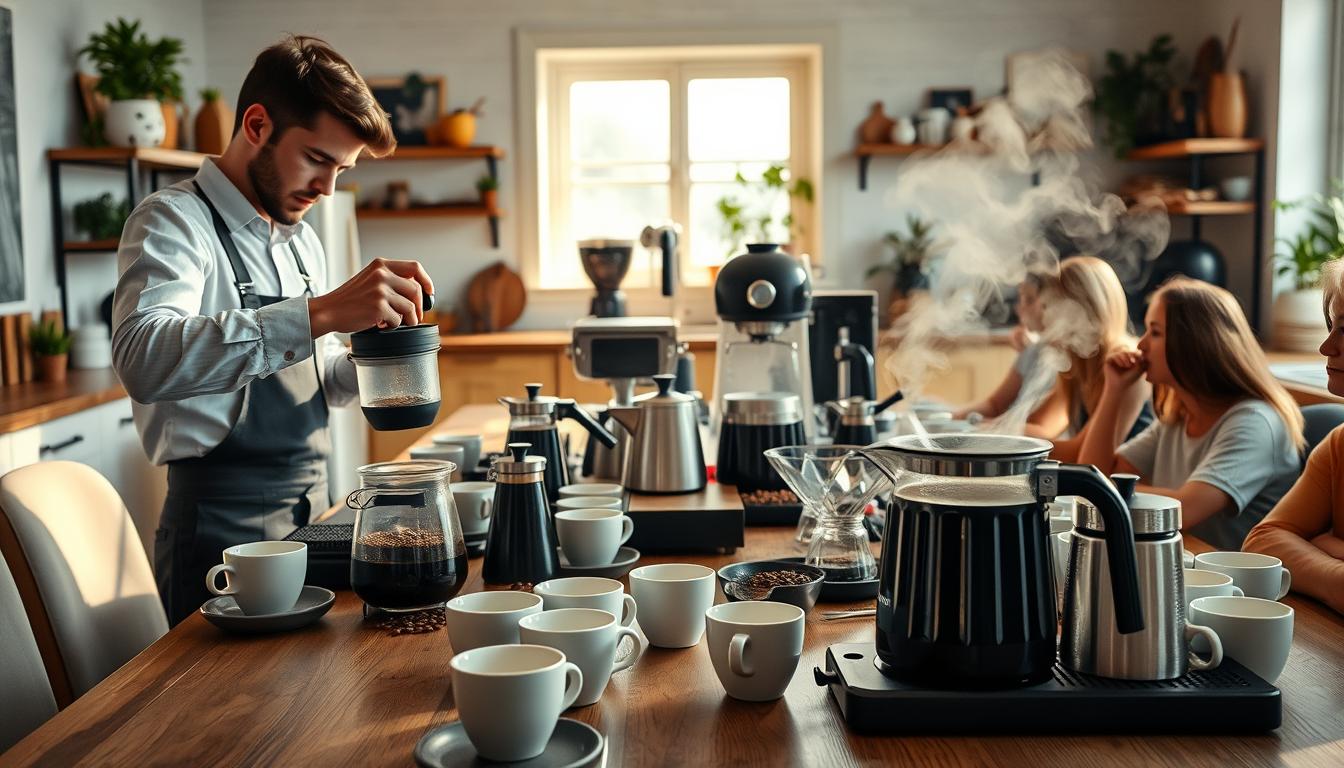
Common reliable methods include stacked French press batches, automatic drip brewers or urns, skilled big-batch pour over, and cold-brew concentrate made ahead. You’ll learn ratios, scaling rules, and service tips that keep the line moving.
This guide suits hosts handling mixed tastes, including decaf drinkers, who want memorable, good coffee without café-level fuss. Aim for balanced extraction, hot-but-not-scorched holding, and easy customization so each person can finish their cup the way they like.
Plan your coffee service before you start brewing
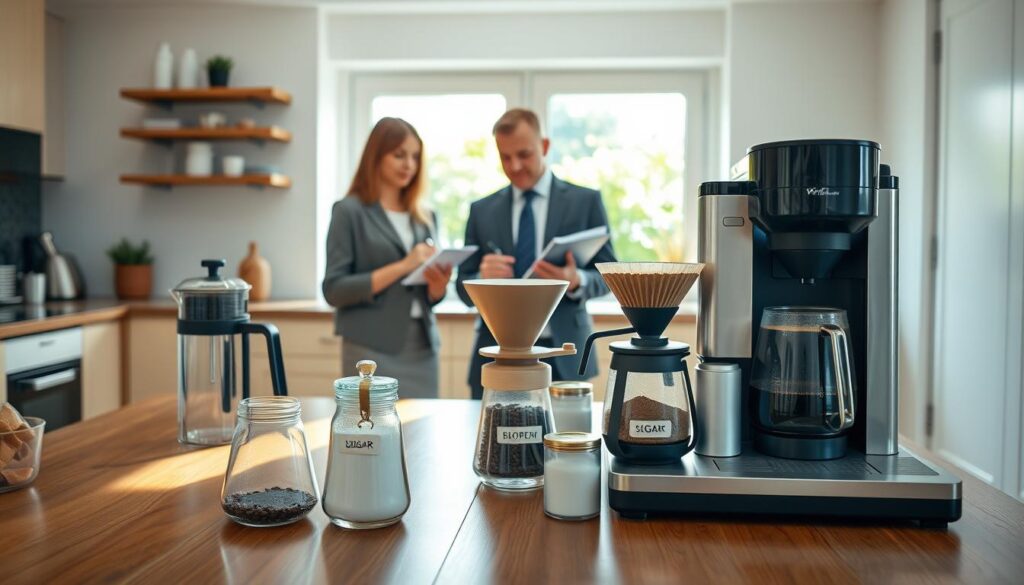
A short plan keeps the line moving and protects flavor when you serve many guests. Start by counting likely cups and mapping the busiest moments of the day.
Figure out cups and rush times
Use a rule of thumb: plan 1–2 cups per person in the first hour and expect refills. Sketch the service rush—arrival, after breakfast, dessert—so you know whether you need continuous brewing, one big batch, or a make-ahead concentrate.
Match the method to your time and gear
Pick a hands-off batch option if you want to spend time with family. Choose a more controlled way if you’re trying to impress—practice that method once before guests arrive.
Pick beans that scale and include decaf
Select fresh, specialty coffee beans; organic or shade-grown options are a plus. Offer decaf for later in the day or for guests sensitive to caffeine.
- Gear checklist: large electric kettle, scale, extra filters, insulated carafe.
- If buying pre-ground, get it as close to the event as possible and match grind to your sizes.
- Pre-measure doses into labeled bags (Press #1, Drip Batch A) so brewing stays fast.
How to make coffee for a large group without sacrificing flavor
Large batches demand tweaks in grind, pour, and timing to stay tasty. Follow a few concrete rules and you protect bright taste even when brewing big quantities.
Use consistent, scalable ratios
Weigh coffee and water for every batch. A stable coffee-to-water ratio matters more than scoops when serving many people.
Example: 32g/525g drains in about 3:00, but doubling to 64g/1050g often drags to ~5:30 and over-extracts. That extra minutes changes extraction and dulls flavor.
Adjust grind and mind contact time
As batch size grows, make the grind slightly coarser so water moves faster through the bed. Test one small batch first to find your grinder’s sweet spot.
Think in plain terms: pour over adds drain time, French press adds fill time to steep time. Start the timer at the start of the pour—fill time counts.
Pouring, temperature, and filtering notes
For big-batch pour over, pour more assertively and spread water evenly to avoid channeling and harsh notes. Manage hot water timing by roast: very light roasts cool ~30 seconds, very dark roasts 2–3 minutes before use.
Thick or double filters slow throughput—cold brew cleanup can take over an hour. Plan that into service timing.
- Quality checklist: keep ratio steady, coarsen grind as needed, watch total contact time, pour with intention, control temperature.
Choose the best brewing method for your group size and setup
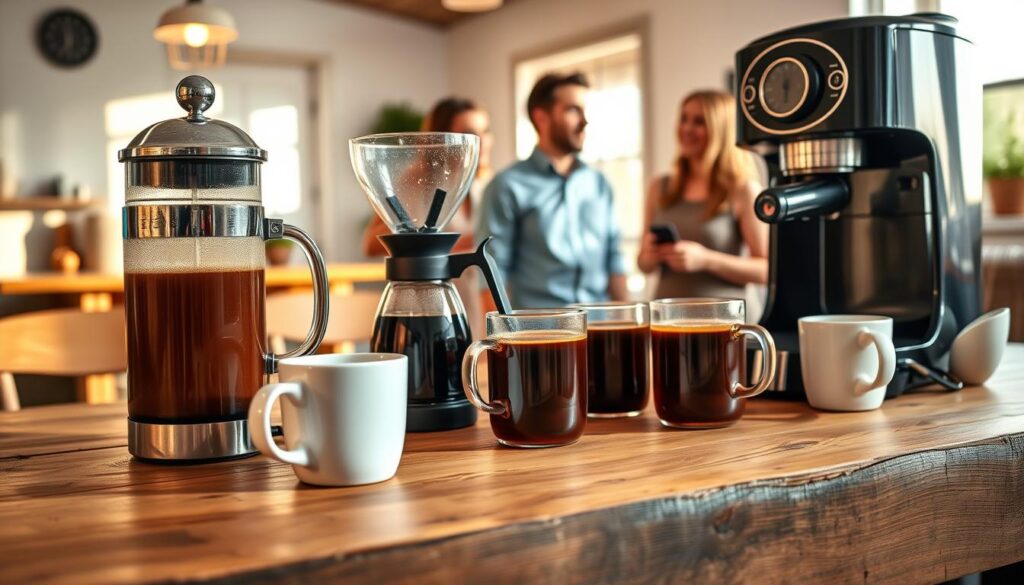
Choose a brewing setup that balances volume, speed, and consistent taste. Think in three decision factors: volume per cycle, hands-on effort, and how forgiving the method is when you step away.
Large French press batches
The press is simple and repeatable. One practical batch: 60g coffee with 960g water yields about 30 oz (roughly 3–4 mugs) and finishes in ~4 minutes plus cleanup.
It gives full-bodied flavor and is easy to repeat when you need several presses back-to-back.
Automatic drip machines and urns
Drip and urn makers cover the biggest volume—roughly 12–40 cups depending on model—with minimal labor. Quality varies; machines hitting SCA temps give better extraction.
Consider Technivorm Moccamaster for premium performance or Bonavita for value that meets brewing basics.
| Method | Volume per Cycle | Hands-on Effort | Best Use |
|---|---|---|---|
| French press | ~30 oz per 60g/960g batch | Low–Medium | Reliable, full-bodied small batches |
| Automatic drip / urn | 12–40 cups | Low | High-volume, low-attention service |
| Big-batch pour over / drip basket | Varies by brewer | High | Maximum control and clarity |
| Cold brew concentrate | Scales easily (12–24 hr steep) | Low (ahead) | Flexible hot or iced service |
Service notes and shortcuts
Thermal carafes keep taste stable; hot plates cook and amplify bitterness during service.
Big-batch pour over gives control but needs skill; if a drip machine underperforms, pour hot water by hand: bloom 30–45 seconds, then staged pours.
For limited setups, buy fresh ground that matches the method: coarse for press and batch cold, medium for drip and pour-over, fine only for espresso or moka.
Serve coffee to a crowd: keep it hot, fresh, and easy to customize
Serving many people well means protecting flavor during service, not just brewing a big pot. The biggest flavor killer is heat plus time: when brewed drink sits on a warmer it turns bitter and flat.
Brew in smaller batches when possible
Brew, then move the liquid immediately into a pre-warmed thermal carafe. Start the next batch only when the carafe level or guest line demands it. Smaller batches protect quality and make refills predictable.
Set up a DIY coffee bar with milks, sweeteners, and spices
Lay out cups, lids, napkins, and labeled carafes (Regular / Decaf) in distinct zones so several people can serve themselves without crowding. Keep lids closed and preheat vessels with hot tap water for better holding.
- Offer half-and-half plus at least one dairy-free milk (oat is a crowd-pleaser).
- Provide granulated sugar, a low-calorie sweetener, and simple syrups.
- Add spices—cinnamon, nutmeg, cocoa—for easy upgrades.
Troubleshoot: if a cup tastes too strong, dilute with hot water. If it tastes weak, brew a fresh small batch instead of reheating an old pot. For more planning tips, see this guide on brew coffee for big groups.
Pull it all together for smooth coffee service on the big day
Nailing volume, grind, and holding strategy ahead of time keeps cups bright and lines short.
Event plan: decide servings, pick your main method, buy beans plus decaf, prep gear and containers, then schedule brew times backward from the serving window.
Scaling rules matter—keep a steady ratio, expect longer drain or contact time as batches grow, and coarsen grind or pour more aggressively so the final cup stays balanced.
Quick recommendations: French press for steady flavor, drip or urn for max volume, cold brew for make-ahead flexibility, and big-batch pour over when you want control and presentation.
Do one practice run, keep a fresh hot option early, hold backups in thermal carafes, and label regular versus decaf. Confirm water, filters, cups, and a simple workflow so you can enjoy the event while serving great cups.