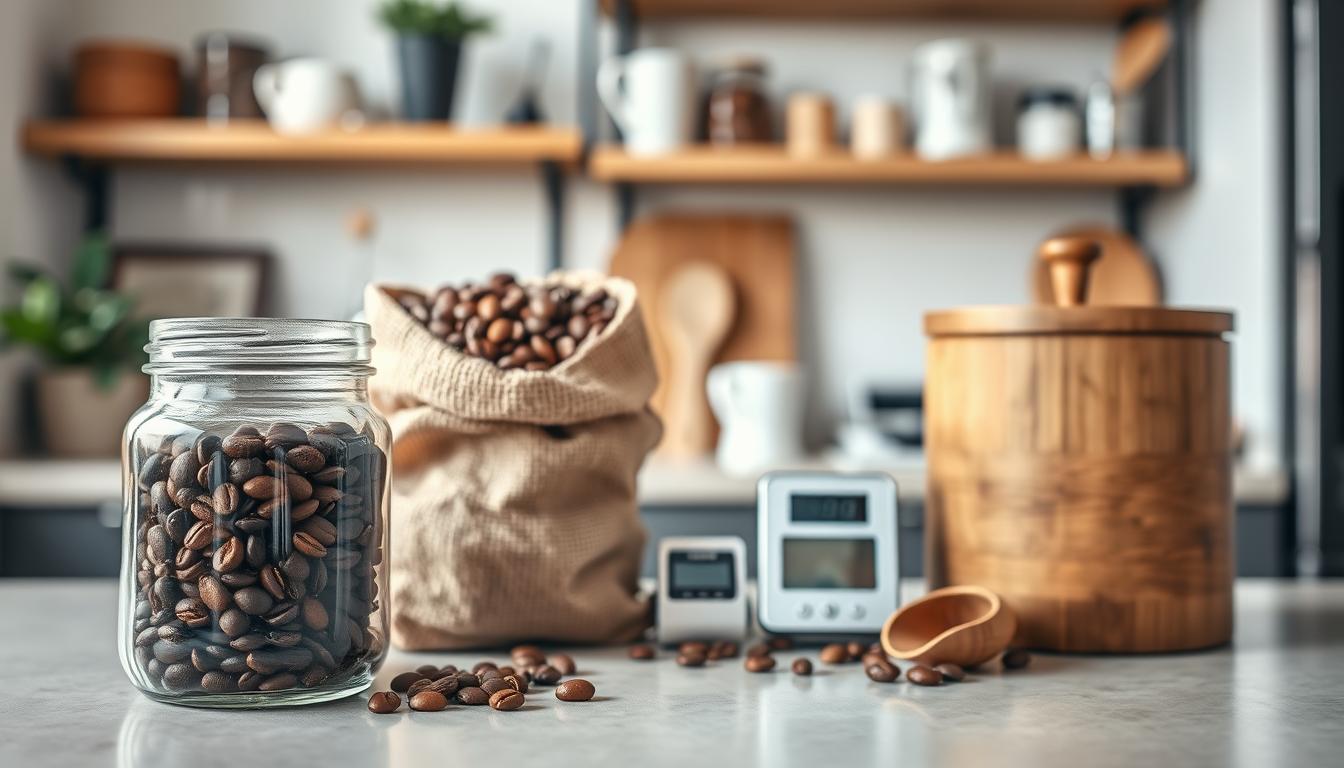
how to store coffee beans
This short guide shows the best ways to keep your daily cup tasting great and what to do for longer-term care. You will learn simple steps that slow staling and keep aroma and flavor lively.
Expect honest limits: even top roasts lose sparkle over weeks. The right routine stretches usable freshness so small batches still taste like fresh roast.
Why beans go stale is easy: oxygen, light, moisture, and temperature swings speed breakdown. Cut air flow, avoid sunlight, and pick a stable spot for the bag or jar.
Practical outcomes include choosing a pantry spot in a U.S. kitchen, deciding between the original bag and an airtight container, and when the freezer earns a pass for longer storage.
Whole beans hold flavor far better than ground. This intro promises quick checklists: what to do today, what to skip (like the fridge), and one simple habit that keeps your cup tasting like coffee.
What makes coffee go stale fast: oxygen, light, moisture, and temperature swings
Four everyday forces — air, bright light, dampness, and shifting temperatures — quietly strip a roast of its best traits. Staling shows up as a flatter aroma, muted sweetness, less intensity, and odd off-notes that replace nuanced flavor.
Why roasted beans pull in moisture and smells
Coffee is hygroscopic: it absorbs ambient moisture and nearby odors. That is why keeping a bag near spices, onions, or a smelly freezer often ruins the cup.
Oxygen and light that flatten aroma
When oxygen meets the roast, volatile aromatics escape. This oxidation dulls the profile over days and weeks, especially after grinding.
Direct sunlight or a clear jar speeds that loss. Bright countertop placement accelerates breakdown and weakens flavor fast.
Temperature swings and condensation risk
Repeated warming and cooling speeds chemical change. It also causes condensation, which adds unwanted moisture and invites stale notes.
- Enemy checklist: air (oxygen), light, moisture, and temperature changes.
The goal of good coffee storage is simple: limit those four variables with the least effort in a typical home. The next section shows practical room-temperature choices that do exactly that.
How to store coffee beans at room temperature for everyday freshness
A stable, dark place in the home is the single most effective move for everyday freshness. Pick a cool pantry or a shaded cupboard away from ovens and windows.
Pick the right spot
Choose a consistent, cool place that avoids heat and light. A pantry or cupboard works best. Make sure the bag sits upright and is not near the stove.
Using the original bag
Open the bag briefly, squeeze out excess air, and reseal tightly. Resealable zipper bags with a one-way valve let CO₂ escape and limit oxygen entry.
When an airtight container helps
If you finish a bag after several weeks, transfer the remainder to an airtight container. Opaque stainless or ceramic containers are forgiving in brighter kitchens. If using clear glass, keep it inside a dark cabinet.
- Pick a cool, dark place (pantry or cupboard).
- Keep the bag sealed between uses; open only briefly.
- Portion a small daily-use amount; keep the rest sealed.
Grinder hoppers and pro practice
Don’t leave beans in hopper storage. Most hoppers leak air and collect oil, which dulls flavor. Pros empty and clean hoppers nightly and store the bulk supply sealed, then refill in the morning.
| Option | Light protection | Air control | Best use |
|---|---|---|---|
| Original resealable bag | Good if opaque | One-way valve helps | Short-term everyday use |
| Airtight container (stainless/ceramic) | Excellent | High | When finishing bag takes weeks |
| Clear glass jar | Poor unless kept in cupboard | Depends on lid | Visible storage; keep hidden from light |
Storage works best when paired with buying amounts that match your brew schedule and the roast date. That way your daily portion stays bright and the main supply sees less air.
how to store coffee beans based on roast date and your brew schedule
Match your roast date with a realistic brew plan so peak flavor lines up with when you drink most. Start by checking the “roasted on” label rather than a generic “best by” shelf tag.
Understanding degassing after roast
Fresh roast releases CO₂ for a short period. Brewing too soon can taste sharp or uneven.
Give darker roasts a few extra days; lighter roasts often need less rest. That mild pause evens extraction and improves aroma.
Freshness windows by brew method
| Method | Optimal window after roast | Reason |
|---|---|---|
| Filter / pour-over | 2 days – 4 weeks | Best clarity and aroma |
| Espresso | 1 week – 6 weeks | Stability for crema and balance |
| Cold brew / long steep | 2 weeks – 6 weeks | Less sensitive to early degassing |
12-ounce bag timeline and quick examples
A typical 12-ounce bag at 18 g per day lasts about 19 days. That fits the filter window for many home brewers.
If you pull espresso only weekends, buy smaller weekly packs or split a bag into portions and keep the bulk sealed. Pour-over every morning? Aim for weekly buys for best flavor.
Containers, bags, and materials that actually protect beans
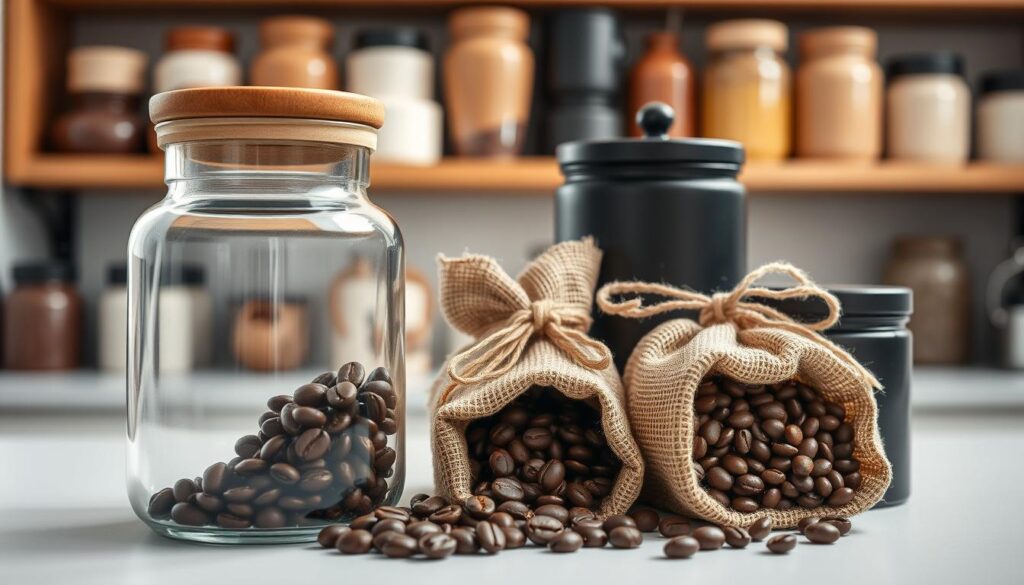
Pick containers that actually block air and light—tiny differences matter for flavor retention.
First, airtight matters most. An airtight container is a lid and seal that cuts true air exchange, not just a decorative top. That keeps volatile aroma locked inside and slows oxidation.
Seals, materials, and light protection
Opaque metal or ceramic containers stop sunlight entirely. Clear jars work only if kept inside a dark cupboard.
High-barrier roaster bags with a one-way valve let CO₂ escape while limiting oxygen entry. Thin paper or poorly sealed bags allow moisture and nearby smells to pass through.
Bag, jar, or canister—what actually matters
If you use a jar, choose a strong lid and open it briefly. Vacuum-style canisters and trusted models (for example, vacuum canisters like Fellow Atmos) reduce air movement best for slower turnover.
Avoid storing near spices or cleaning agents; odor transfer will harm flavor quickly.
| Option | Light protection | Air control | Best use |
|---|---|---|---|
| High-barrier roaster bag (one-way valve) | Excellent | Good — valve vents CO₂ | Fast turnover; daily use |
| Airtight canister (vacuum-style) | Excellent | Very high — reduces air exchange | Slow turnover; preserves flavor weeks |
| Opaque ceramic or metal jar | Excellent | High — tight lid required | Home storage when hidden from light |
| Clear glass jar | Poor unless kept in dark cupboard | Depends on lid quality | Visible storage; not for long-term |
Quick choice guide: fast turnover = leave the bag; slower use = an airtight canister; bulk buys = portion into sealed packs. This is the best way for balanced coffee storage and retained flavor.
Why the fridge isn’t a good place for coffee beans or ground coffee
Putting an opened bag in the fridge seems safe, yet it exposes the roast to moisture and odor transfer that flatten taste.
The core rule is simple: don’t keep whole or ground roasts in the fridge for daily use. A typical refrigerator cycles humid air from produce, milk, and cold containers. That moisture finds its way into the roast and dulls aromatic oils.
Fridges also concentrate strong scents. Leftovers, onions, and sauces leak aroma molecules. Even a decent bag lets those smells migrate and taint your cup.
What tasting and tests show
Controlled tastings found fridge-kept samples trended flatter than those on a shelf or in the freezer. The cold dampened brightness and highlighted stale notes.
- Core rule: don’t refrigerate opened packages for daily use.
- Moisture risk: frequent door opening and damp foods raise humidity.
- Odor risk: aromatic foods transfer smells through imperfect seals.
Exceptions and a quick transition
Unopened, factory-sealed bags are better left cool and dark at room temperature rather than chilled. Ground roasts are more vulnerable than whole ones because larger surface area absorbs moisture and odors faster.
| Location | Moisture risk | Flavor outcome |
|---|---|---|
| Fridge | High | Flatter, risk of off-odors |
| Freezer (sealed) | Low if airtight | Better for long-term retention |
| Shelf / pantry | Low if cool and dark | Best for daily freshness |
Cold can help, but the freezer and fridge are not the same. The next section explains when freezing works and the right packaging steps.
When the freezer works for storing coffee beans and how to do it right
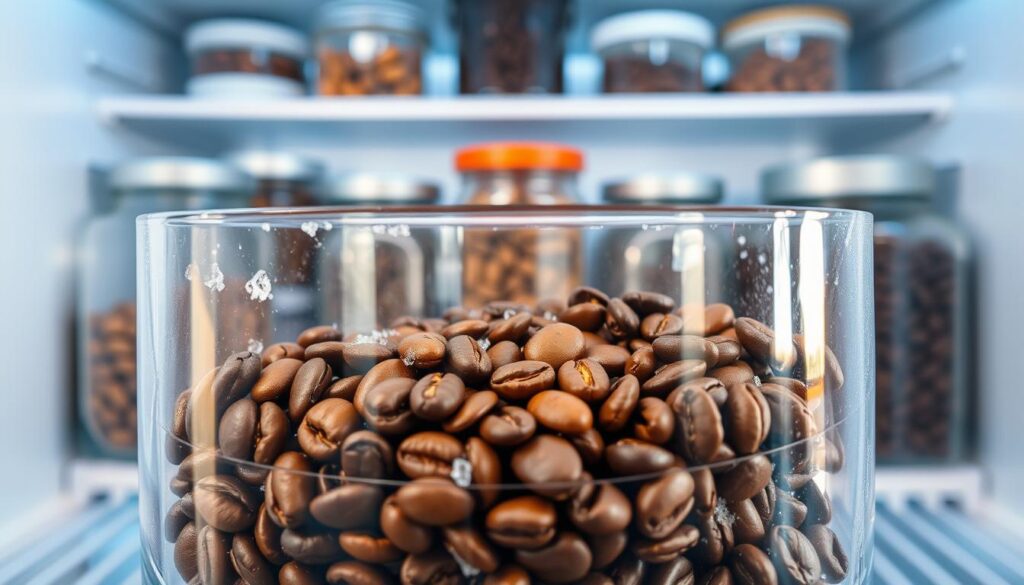
If you buy in bulk or want to save special lots, the freezer is the practical choice. Coffee Science testing (Apr 1, 2025) found frozen, opened samples scored higher than those left on a shelf or kept in a fridge.
Freezer storage preserved acidity and sweetness best over several weeks. Still, an unopened bag at room temperature beat all opened options. Use freezing when you cannot finish a package within a few weeks.
Practical steps and packaging
- Portion into day or two-week lots so only one package is opened at a time.
- Ranked packaging: vacuum seal (best), high-quality airtight freezer bags (next), standard bags (avoid).
- Make sure strong barriers are used if your freezer holds strong odors; weak bags let smells penetrate and harm flavor.
Thawing, refreeze rule, and temperature notes
Pull one portion and let it reach room temperature before opening. This prevents condensation that brings moisture and dulls aroma.
Do not refreeze once thawed. Repeated temperature swings raise moisture risk and accelerate staling. For best results, keep frozen portions steady until needed.
| Method | Practical use | Protection vs air/moisture |
|---|---|---|
| Vacuum sealed | Bulk long-term | Very high |
| Airtight freezer bags | Two-week portions | High (if excess air removed) |
| Shelf | Daily turnover | Moderate |
Keep coffee tasting like coffee: a simple storage routine you can stick with
A handful of simple habits will protect flavor and make freshness part of everyday life.
Daily routine: keep the roast in its original bag or an airtight container. Place that container in a dark pantry or cupboard. Open only long enough to measure a dose.
Weekly routine: check the roast date and plan how fast you will finish the bag. If a bag will last 7–14 days, keep it at room temperature. If it will last longer than a few weeks, portion and freeze sealed packs.
Grind coffee right before brewing whenever possible. Ground coffee loses aroma faster, so store it extra carefully.
Set up one small container for weekly use and keep the main supply sealed and tucked away. For extra reading on sealing and portioning, see this storing guide.
Buy a bit less and restock more often—it’s the best way to keep flavor high and life simple.