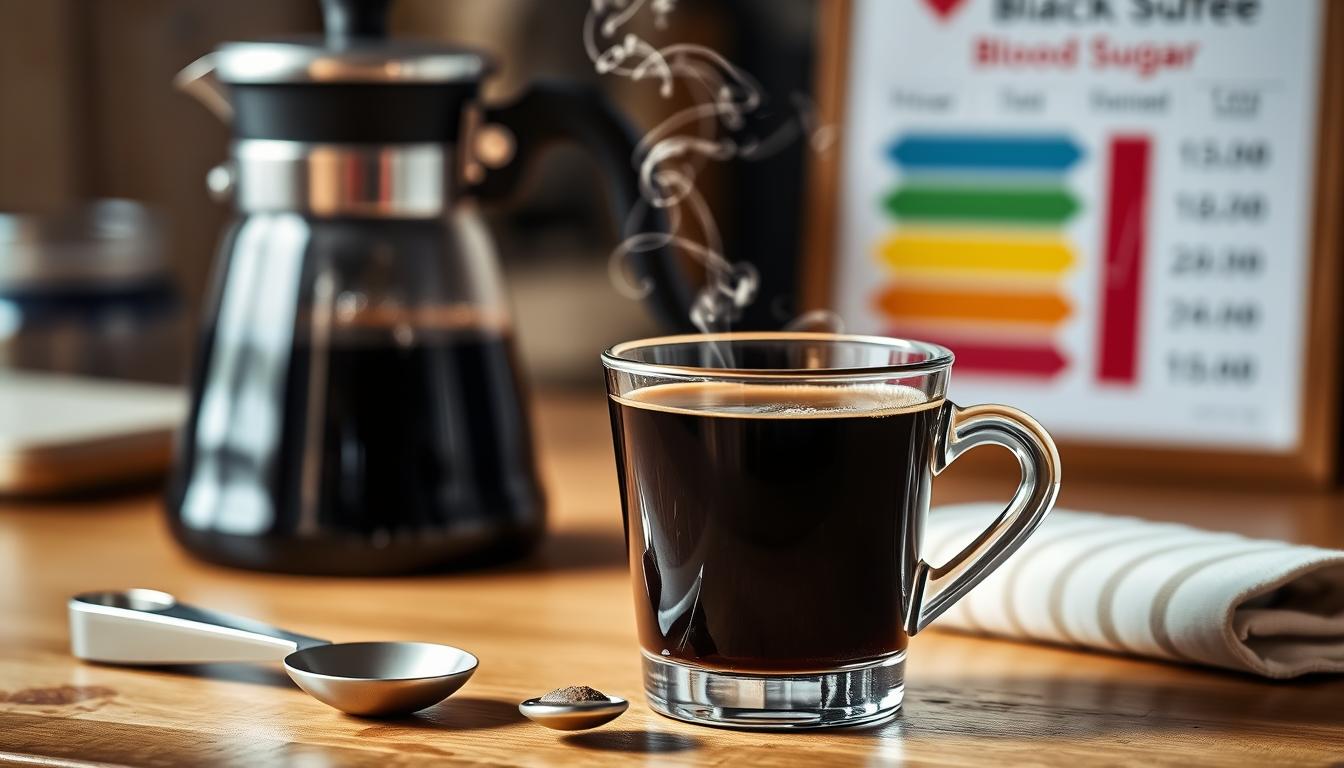
does black coffee raise blood sugar
Many people wonder if a morning cup will change their numbers. In simple terms, plain brew has no carbs, so the drink itself usually does not add glucose to circulation.
That said, caffeine can trigger stress hormones. Cortisol and adrenaline may tell the liver to release stored glucose. For most folks the result is tiny — often a 5–10 mg/dL bump or no visible change.
Responses vary. Timing, sensitivity to caffeine, and what you add to the cup matter more than the beverage’s calories. People with diabetes or insulin resistance may notice a larger effect in the morning.
This guide will show how to test your own response, spot a brief rise on a CGM or meter, and try practical swaps like timing, decaf, or different add-ins. This is educational and not medical advice; discuss medication changes with your clinician if you use insulin or glucose-lowering drugs.
How caffeine can affect blood sugar and glucose levels in the body
Caffeine stimulates the nervous system and often peaks in the bloodstream within 30–60 minutes. That surge can nudge hormones that influence glucose levels, and effects can last 3–6 hours in many people.
Why cortisol and adrenaline rise — and what it means
Caffeine raises cortisol and adrenaline. Those hormones trigger a fight-or-flight response that tells the body to make fuel available.
As a result, circulating glucose can rise so muscles and the brain have quick energy — even if you’re sitting still with a mug.
The liver’s role in releasing stored glucose
The liver keeps glycogen, a stored form of glucose. Cortisol and adrenaline tell the liver to convert glycogen to glucose and release it into the circulation.
That release can show up as a higher CGM curve or a raised fingerstick reading after caffeine intake.
Short-term insulin resistance vs. long-term effects
Acute caffeine can lower insulin sensitivity for a few hours, producing higher post-meal readings in some people. Some studies report roughly an 8% higher post-meal level on caffeine days for people with type 2 diabetes.
Long-term habitual coffee use, however, often links to lower diabetes risk. Compounds beyond caffeine and tolerance may explain that contrast; decaf sometimes shows similar associations.
When changes are small versus noticeable
Many people see little change or a modest 5–10 mg/dL bump. People with insulin resistance or certain sensitivities may see larger or longer rises.
Dose, genetics, sleep, stress, and whether caffeine is paired with food all shape the effect. Experts often cite about 400 mg/day as an upper limit, while some glucose responses occur at ~200 mg in sensitive individuals.
- Peak effect: 30–60 minutes
- Duration: 3–6 hours
- Upper daily reference: ~400 mg
| Factor | How it acts | Typical glucose effect |
|---|---|---|
| Cortisol & adrenaline | Signal liver to release glycogen | Small to moderate rise (5–10 mg/dL common) |
| Insulin sensitivity | Temporarily reduced after caffeine | Higher post-meal readings possible, notably in insulin resistance |
| Habitual consumption | Tolerance and other compounds may protect | Long-term association with lower diabetes risk |
For tailored guidance and deeper review of research, see diabetes and caffeine.
does black coffee raise blood sugar for everyone?

Why many people see little to no change
Individual responses vary, but most people do not have a meaningful rise in fasting glucose after a plain cup. Stable insulin function, quick caffeine clearance, and lower stress-hormone responses help keep readings steady.
Having a small meal or protein with the drink also blunts any transient change. For many, any shift is modest and short lived.
Why caffeine-sensitive people may see higher blood sugar levels
Some people show clear sensitivity. Signs often include jitters, anxiety, a racing heart, or sleep trouble.
- Stronger cortisol and adrenaline spikes prompt the liver to release glucose.
- That hormonal surge can raise blood sugar levels more than the typical 5–10 mg/dL seen in others.
- If you notice physical sensitivity, your glucose response may be larger.
What research suggests for people with type 2 diabetes
Short-term trials report reduced insulin sensitivity and higher post-meal readings with daytime caffeine. One study found about an 8% increase in glucose when people with type 2 diabetes took caffeine at breakfast and lunch.
Responses vary even within diabetes. Use CGM or fingersticks to test your own pattern, and talk with your clinician if you see repeated, significant spikes.
| Group | Typical effect | Mechanism | Practical advice |
|---|---|---|---|
| Most people | Little or no change | Normal insulin response, fast metabolism | Enjoy in moderation; pair with food if concerned |
| Caffeine-sensitive people | Moderate rise (5–15 mg/dL) | Higher cortisol/adrenaline release | Limit dose, try decaf or test with a meter |
| People with type 2 diabetes | Higher post-meal spikes (≈8% in some studies) | Reduced insulin sensitivity after caffeine | Monitor closely; discuss medication/timing with provider |
How to tell if your morning coffee is raising your blood glucose
A simple test will show whether your usual morning cup affects your numbers. Use a meter or CGM and a short log to collect a few clear datapoints over a few days.
Step-by-step self-test
- Check baseline glucose or CGM trend just before drinking your regular cup.
- Drink your usual coffee and note the time and approximate caffeine amount.
- Recheck around 60 minutes, then again at 120 minutes to capture peak and early recovery.
What a typical change may look like
Some people show no meaningful change. Others see a small bump — often about 5–10 mg/dL. People with insulin resistance can have larger or longer rises, especially when the cup is paired with carbs.
| Pattern | Usual range | What to watch for |
|---|---|---|
| Flat | No change | Normal insulin response, minimal effect |
| Small bump | ≈5–10 mg/dL | Short-lived, returns within 2–3 hours |
| Noticeable rise | >10 mg/dL or prolonged | Consider adjusting timing, dose, or testing on a control day |
Logging, control days, and tools
Record cup size, caffeine estimate, whether it was truly plain, time, and any food eaten within two hours. Add notes on sleep or stress.
Try a control day with decaf or no coffee to compare the same morning routine. Use phone notes, a spreadsheet, or a diabetes app. If you use a CGM, save screenshots of the curve before and after your cup.
Contact a clinician if you see repeated large spikes, frequent highs across several days, or unexpected lows while on insulin or medications. For more research-backed guidance, read this summary on coffee and blood sugar research.
What to put in your cup to avoid a blood sugar spike
What you stir into a morning cup often explains sudden spikes on a meter. Start with a true black baseline to see if add-ins are the culprit. Changing one item at a time helps you spot the effect on glucose.
Sugar, honey, agave, and flavored syrups that raise glucose fast
Table sugar, honey, agave, and flavored syrups (vanilla, caramel, mocha) are quickly absorbed carbs. They can push glucose up within 30–60 minutes, so even a tablespoon matters.
Sweetened creamers and sneaky carbs in popular drinks
Pre-made sweetened creamers often hide grams of sugar. “Skinny” café drinks can still pack carbs. Read labels, measure tablespoons, and avoid free-pouring to cut unexpected carbs.
Milk, half-and-half, heavy cream, and unsweetened plant milks compared
Dairy contains lactose, a natural sugar, so milk and half-and-half can raise levels in larger amounts. Heavy cream has fewer carbs per splash. Oat milk tends to be higher-carb; choose unsweetened almond, coconut, or cashew for fewer carbs.
| Option | Approx carbs per cup | Best use |
|---|---|---|
| Oat milk | 10g+ | Higher-carb; watch portions |
| Unsweetened almond/coconut | 1–2g | Low-carb swap for cold brew or lattes |
| Heavy cream | 0–1g (per splash) | Low-carb splash, richer mouthfeel |
Stevia, monk fruit, erythritol, and sugar alcohols
Nonnutritive sweeteners like stevia and monk fruit do not raise glucose for most people. Sugar alcohols and erythritol often have a smaller impact, but some individuals show mild rises. Test what works for you.
Order this instead: drip or Americano with a splash of heavy cream, or cold brew with unsweetened almond milk. Remove syrup first, then change milk, and recheck readings after each swap.
Why drinking coffee on an empty stomach can hit sugar levels harder
Waking with an empty stomach can make that morning cup hit your glucose harder than later in the day. Without food, there is no protein, fat, or fiber to buffer the hormone response that follows caffeine.
The Dawn Phenomenon and higher morning cortisol
The body raises cortisol in the early morning to help you wake. That surge can lift fasting readings on its own.
Add caffeine and the two effects can combine. You may see higher fasting numbers, then an extra bump after the first sip even if you skip carbs.
How protein and fiber buffer caffeine’s impact
Eating protein and fiber before or with the first cup slows digestion and blunts hormone-driven glucose release. Try eggs, Greek yogurt, cottage cheese, or chia pudding.
A small protein + fiber snack before drinking can reduce peak levels and shorten the duration of a rise.
Simple timing tweaks for steadier readings
- Delay the first cup 60–90 minutes after waking to let cortisol settle.
- Drink after breakfast, or split caffeine into a small first cup and a later top-up.
- Test each tweak for 3–7 days and compare average readings rather than one day’s result.
| Action | Why it helps | Try for |
|---|---|---|
| Eat protein first | Buffers hormone-driven glucose release | 3–7 days |
| Delay drinking | Allows morning cortisol to fall | 1–2 weeks |
| Split dose | Reduces peak impact on levels | 3–7 days |
If you have insulin resistance, empty-stomach drinking may expose that vulnerability. The goal is not to remove the benefits of a routine, but to lower the size and length of spikes with small timing and food changes.
How to adjust coffee consumption to support insulin sensitivity

Simple swaps can help you keep insulin sensitivity steady while still enjoying your routine.
Try decaf or lower-caffeine options
If caffeine raises your glucose, test decaf for a week. Swap one usual cup for decaf and compare post-coffee readings.
Record levels at 60 and 120 minutes to see any change in blood sugar.
Set a caffeine “sweet spot” and track cups
Find the smallest caffeine dose that gives alertness without a glucose penalty. Note that many experts cite ~400 mg/day as a general upper limit, but responses vary.
Track how many cups and the type (drip, espresso, cold brew) since content differs by drink.
Avoid high-sugar combos
Skip energy drinks, sweet bottled coffees, and dessert-style café items. Those pairings add carbs and boost the risk of larger spikes.
Use movement after drinks
A 5–10 minute walk after breakfast or a short “movement snack” helps muscles use glucose and lowers post-meal levels.
Protect sleep to lower next-day resistance
Poor sleep worsens insulin resistance and magnifies caffeine effects. Try a cutoff in the early afternoon to protect rest.
| Action | Why it helps | Try for |
|---|---|---|
| Swap to decaf | Reduces caffeine-triggered glucose rise | 1 week test |
| Limit total cups | Manages daily caffeine load and metabolic effects | Track 1–2 weeks |
| Choose low-sugar drinks | Avoids added carbs that worsen spikes | Adopt as habit |
| Short post-meal walk | Improves glucose uptake by muscles | 5–10 minutes daily |
You do not need perfection. Small, repeatable changes in consumption can improve long-term health and lower risk over time.
Special considerations for diabetes, prediabetes, and insulin resistance
Not all routines fit every metabolism — especially for people with type 2 diabetes or prediabetes.
Why people with type 2 diabetes may see reduced insulin sensitivity after caffeine
Caffeine can blunt insulin action for a few hours. In type 2 diabetes, that means glucose from a meal may linger longer in circulation.
One trial gave about 250 mg at breakfast and lunch and found roughly an 8% higher average reading, with larger post-meal spikes on caffeine days.
How caffeine with breakfast and lunch can influence post-meal readings
Having a stimulant before a carb-heavy meal can compound rises. Pairing caffeine with protein, fat, and fiber often reduces the peak.
- If post-breakfast readings are higher on caffeine days, test shifting the cup until after the meal.
- If levels stay high, try lowering the dose or using decaf with the first meal.
When stress and poor sleep can exaggerate effects
Stress and short sleep raise cortisol and worsen insulin sensitivity. Caffeine can lengthen that loop by hurting sleep quality.
People on insulin or glucose-lowering meds should avoid big routine changes without monitoring and clinical input.
| Scenario | Mechanism | Practical step |
|---|---|---|
| Type 2 diabetes, morning cup | Temporary insulin resistance after caffeine | Test timing, dose, or decaf for 3–7 days |
| Caffeine with carbs | Combined rise from meal and stimulant | Choose protein/fiber first or delay the cup |
| High stress or poor sleep | Elevated cortisol, worse insulin action | Limit late caffeine; improve sleep hygiene |
Keep your coffee routine, know your numbers, and lower your risk over time
A simple plan of testing and small swaps helps protect long-term metabolic health. Test a baseline, check at about 60 and 120 minutes, and try a decaf day to compare results.
Control add-ins and timing before changing medication. Track one variable at a time so you can see what matters most for your readings and daily life.
Moderate coffee consumption often links to a lower risk of developing type 2 diabetes and other benefits for health. Avoid sugar-forward drinks that undo those gains.
Bring a short log or CGM screenshots to appointments if you have diabetes or prediabetes. The best plan fits your routine and keeps blood sugar trends steadier across the day.